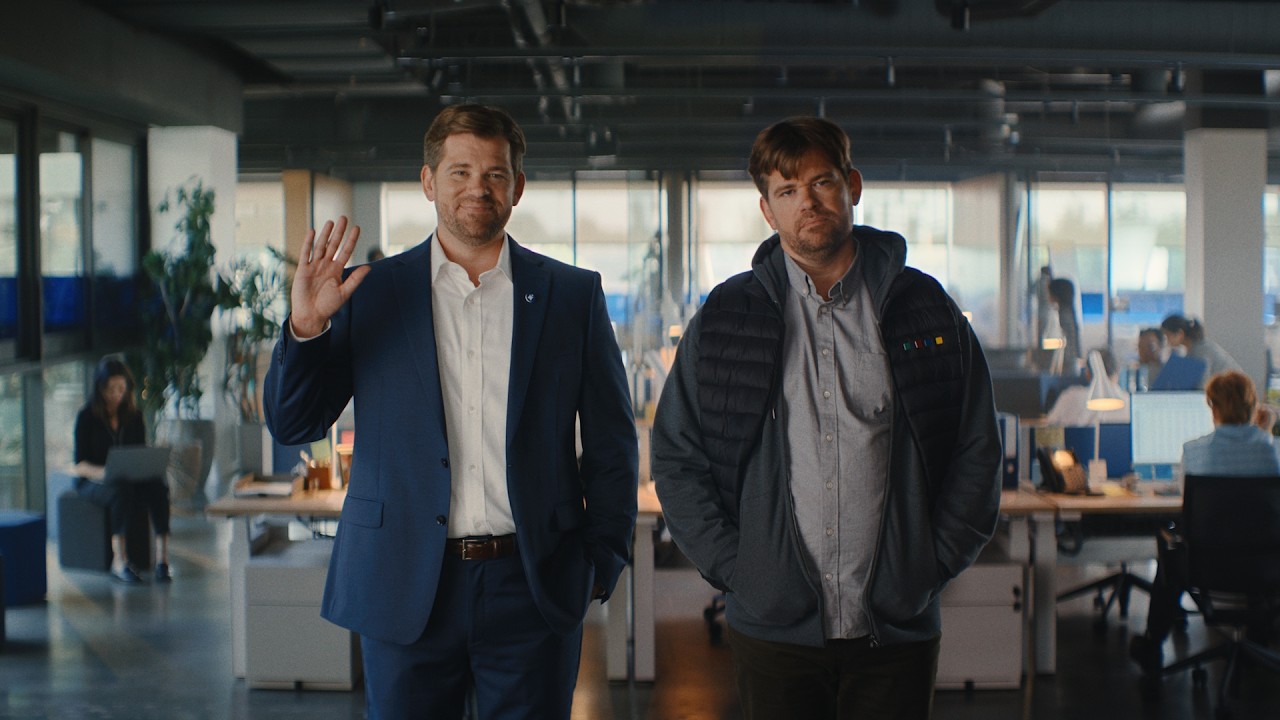
AI Companion vs Big Tech's AI · Webby Award Honoree
As generative AI reshaped enterprise software, Zoom faced a perception challenge. While Microsoft, Google, and OpenAI dominated headlines, Zoom had quietly built one of the strongest AI offerings for work. The opportunity wasn't simply to launch another AI product — it was to reposition Zoom as an AI-first work platform and establish Zoom AI Companion as a credible challenger to Big Tech.
The AI conversation was dominated by Microsoft, Google, and OpenAI. Zoom had a differentiated AI product, but the market still viewed the company primarily as a video conferencing platform. The challenge wasn't convincing customers that AI mattered — it was convincing them that Zoom belonged in the conversation.
Reposition Zoom itself into an AI-first work platform via the Zoom Workplace launch, then build a Mac-vs-PC-inspired challenger campaign for AI Companion that reframed the conversation around practical, trustworthy AI that helps people work better.
Zoom's highest-performing brand campaign to date. Awareness doubled for both Zoom AI Companion (19% → 41%) and Zoom Workplace (22% → 44%), with +14.6-point consideration, +11% qualified leads, 98% video completion, and a Webby Honoree for Best B2B Campaign.
Working closely with the CEO and executive leadership team, I helped define Zoom's evolution from a meetings company to an AI-first work platform, leading product branding, positioning, naming research, UX identity, sales enablement, and global go-to-market strategy.
At the center of that strategy was a unique marketing challenge: we needed to persuade enterprise, mid-market, and small business IT decision makers to enable AI Companion across their organizations by demonstrating measurable cost savings, enterprise-grade trust, security, and product quality — while simultaneously building excitement among the employees who would use it every day.
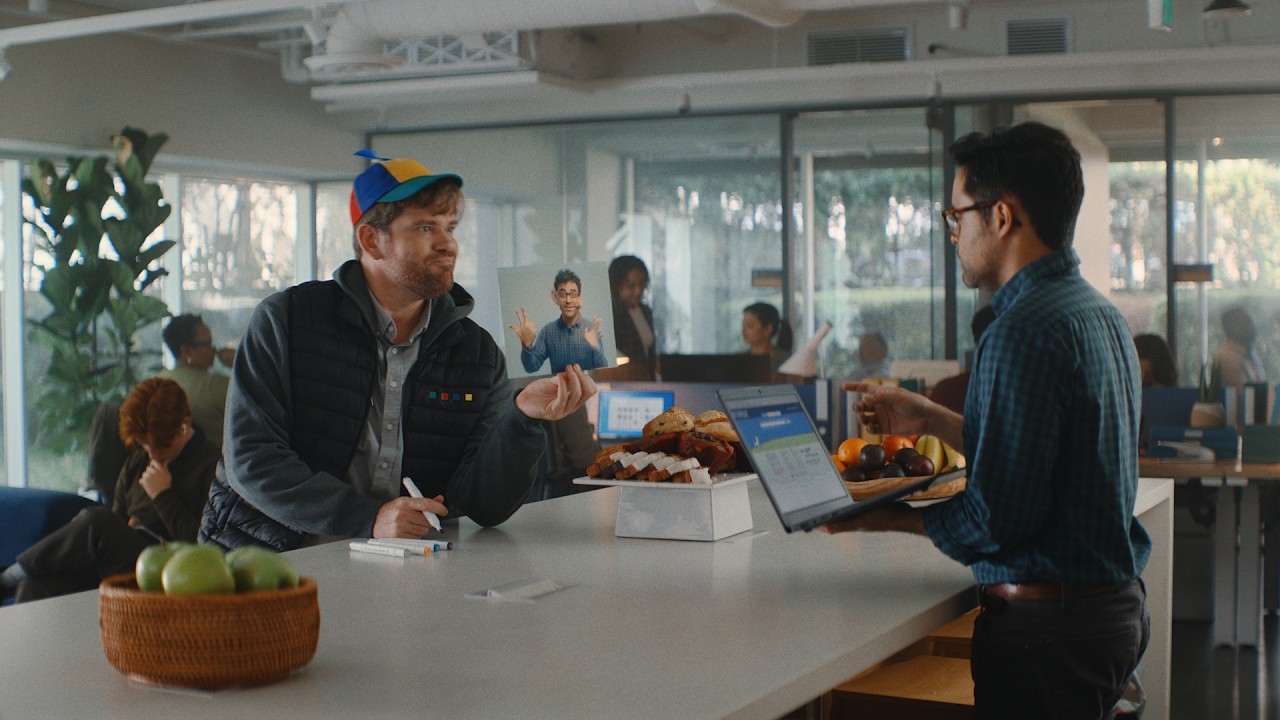
To accomplish that, I developed a challenger brand campaign inspired by the confidence of Apple's iconic Mac vs. PC ads. Rather than competing feature-for-feature with Microsoft or Google, the campaign reframed the conversation around practical, trustworthy AI that helps people work better. The creative was designed to resonate across both audiences — from CIOs evaluating enterprise software to everyday knowledge workers — encountering the campaign through high-profile touchpoints including:
One of the campaign's defining creative constraints was preserving Zoom's long-standing "Work Happy" brand platform. While we explored standalone concepts for AI Companion, leadership chose to anchor the launch within the existing brand promise. Rather than treating that as a limitation, we evolved the creative into "Work Happy with Zoom AI Companion," connecting a familiar emotional platform with an entirely new AI product. The result reinforced years of brand equity while introducing Zoom's vision for practical, trusted AI in the workplace.
In 2023 and 2024, the AI conversation was dominated by Microsoft, Google, and OpenAI.
Zoom had a differentiated AI product, but the market still viewed the company primarily as a video conferencing platform. We needed to change that perception while launching an entirely new AI product into one of the most crowded and fastest-moving technology categories in decades.
Our strategy operated on two levels simultaneously.
Working across product, marketing, design, communications, and executive leadership, I helped develop the Zoom Workplace platform strategy — defining its positioning, messaging architecture, product naming, UX identity, sales enablement, and global go-to-market approach. Rather than selling individual features, we introduced Zoom as an AI-powered work platform.
Instead of competing feature-for-feature with Microsoft or Google, I proposed leaning into a cultural insight: everyone was already talking about AI, but increasingly questioning whether it was actually helpful.
Inspired by the confidence of Apple's iconic "Mac vs. PC" campaign, we positioned Zoom AI Companion as the practical, trustworthy alternative that was included at no additional cost. The campaign acknowledged the industry's growing skepticism while demonstrating that enterprise AI should feel reliable, intuitive, and genuinely useful — not just impressive.
The goal wasn't to attack competitors. It was to redefine what customers should expect from AI at work.
Because Zoom AI Companion lived across the entire Zoom Workplace ecosystem, consistency mattered as much as creativity.
I led the strategic direction across:
Every customer touchpoint reinforced a single idea:
The platform transformation and campaign significantly shifted market perception of Zoom's role in enterprise AI.
The campaign succeeded because it challenged assumptions rather than competitors.
Instead of claiming Zoom had the smartest AI, we repositioned the conversation around what enterprise customers actually needed: AI that was trustworthy, integrated into existing workflows, and designed to improve everyday work — not generate AI-mishap headlines.
By combining product strategy, platform positioning, and brand storytelling, we helped establish Zoom as a credible AI leader during one of the most competitive and consequential moments in enterprise software.
Open to CMO, VP of Marketing, and Head of Brand roles.
Also open to fractional and advisory work.